Choosing the right monospace font pairings can make a big difference in how your text looks and feels. Whether you're designing a website, writing code, or creating a technical document, professional monospace pairing strategies help ensure that your content is both readable and visually appealing.
What Are Professional Monospace Pairing Strategies?
Professional monospace pairing strategies involve selecting and combining monospace fonts to create a cohesive and aesthetically pleasing design. Monospace fonts are characterized by having each character take up the same amount of horizontal space, making them ideal for coding, technical documentation, and any text where alignment is crucial.
When and Why Use Monospace Font Pairings?
You might use monospace font pairings when you need to present code, tables, or any other text where consistent spacing is important. This ensures that the text is easy to read and understand, especially in technical contexts. For example, pairing a clean, modern monospace font like Consolas with a more traditional serif font can create a balanced and professional look.
Practical Examples of Monospace Font Pairings
One effective combination is using Consolas for code blocks and Georgia for body text. This pairing works well because Consolas provides clarity and readability for code, while Georgia adds a touch of elegance and legibility to the main text. Another example is using Inconsolata for technical sections and Lato for headings and subheadings. This creates a modern and clean aesthetic.
Common Mistakes to Avoid
- Overusing Monospace Fonts: While monospace fonts are great for specific uses, overusing them can make your design look cluttered and hard to read.
- Mismatched Styles: Pairing fonts with drastically different styles can be jarring. Stick to complementary fonts that share a similar tone.
- Ignoring Readability: Always prioritize readability. Some monospace fonts may look good but can be difficult to read, especially in smaller sizes.
Useful Tips for Monospace Font Pairing
- Consider the Context: Think about where and how the text will be used. For technical blogs, a clear and simple monospace font like those discussed here can be very effective.
- Test Different Sizes: Make sure the fonts work well at various sizes. Some fonts may look great at one size but become illegible at another.
- Get Feedback: Show your design to others and get their input. Sometimes a fresh set of eyes can spot issues you might have missed.
Real Next Steps for Implementing Monospace Font Pairings
Start by identifying the specific needs of your project. If you're working on a contemporary website, consider using Comfortaa as a monospace partner. For a minimalist and geometric look, these options can be a great fit. Experiment with different combinations and test them in your actual design context. Remember, the goal is to enhance readability and visual appeal without overwhelming the reader.
Next Step Checklist:
- Identify the specific needs of your project.
- Select a primary monospace font and a complementary secondary font.
- Test the font pairing in your design context.
- Get feedback from others and make adjustments as needed.
 Geometric Font Companions for Comfortaa
 Partnering Monospace Fonts for Technical Blogs
 Modern Minimalist Monospace Font Partnerships
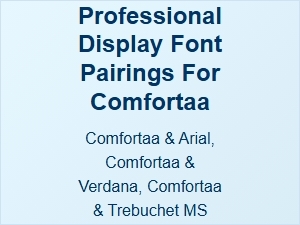 Complementary Display Fonts to Pair with Comfortaa
 Modern Serif Elegance with Comfortaa
 Sleek Website Headers Featuring Comfortaa Font Pairings